
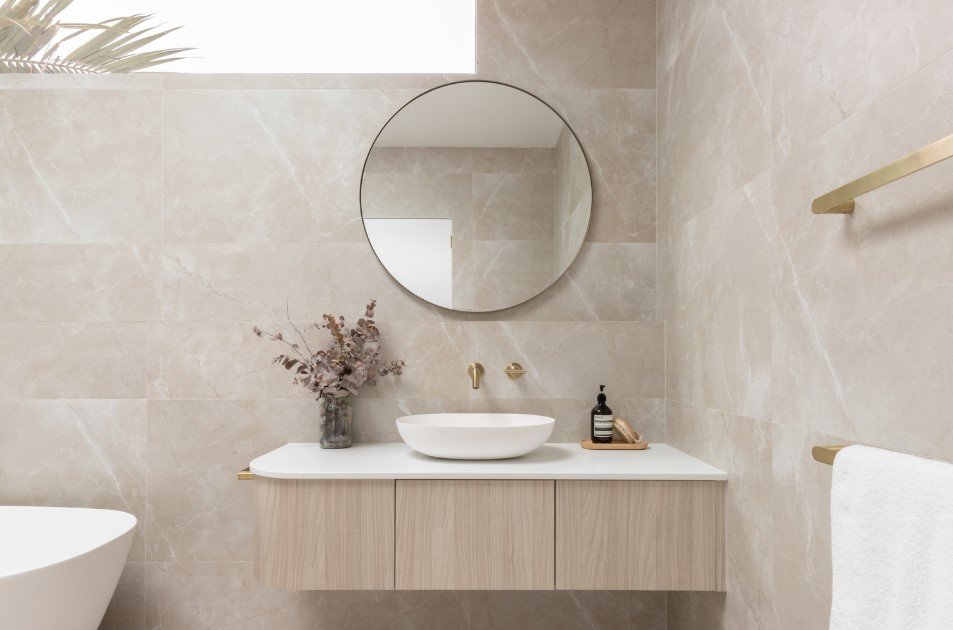
A bathroom sink is one of the most frequently used fixtures in any bathroom, but it is also an important part of the room’s overall design. The right sink can make a bathroom more functional, comfortable, attractive, and easier to keep organized. From compact wall mounted sinks for small spaces to elegant vessel sinks and practical undermount designs, there are many options to consider.
Choosing a bathroom sink involves more than selecting a shape that looks good. The size of the bathroom, available counter space, storage requirements, faucet placement, plumbing configuration, cleaning needs, and overall interior style can all influence which sink works best.
A well chosen sink should fit naturally into the space while providing enough room for everyday tasks such as washing hands, brushing teeth, shaving, and getting ready. It should also work well with the bathroom vanity, countertop, mirror, lighting, and other fixtures.
This guide explores the different types of bathroom sinks, common materials, popular shapes, installation styles, size considerations, faucet options, cleaning tips, storage ideas, and design considerations. Whether you are updating a small bathroom, designing a master bathroom, or planning a complete renovation, understanding the available sink options can help you create a more practical and attractive space.
What Is a Bathroom Sink?
A bathroom sink is a plumbing fixture designed primarily for washing hands, brushing teeth, grooming, and other personal-care activities. It typically consists of a basin, drain, faucet, and plumbing connections.
Bathroom sinks are available in many forms. Some are installed directly into countertops, while others are mounted on walls or supported by a pedestal. Certain styles are designed to provide additional counter space, while others prioritize compactness or visual appeal.
The sink often becomes one of the main focal points of a bathroom because it is positioned in a highly visible and frequently used area. Its shape, material, color, and installation style can influence the entire appearance of the room.
Modern bathroom design offers a wide variety of sink choices, making it possible to find an option for almost any space.
Why the Right Bathroom Sink Matters
The sink may seem like a small part of a bathroom, but it has a major effect on how the space works.
A sink that is too large can reduce valuable floor and counter space. A sink that is too small may be uncomfortable for everyday use and can cause water to splash onto the surrounding countertop.
The height and placement also matter. A sink should be positioned at a comfortable height and should provide enough surrounding space for toiletries and everyday bathroom essentials.
Design is another important consideration. A modern countertop sink may create a completely different atmosphere from a traditional pedestal sink. Choosing a sink that complements the vanity, tile, flooring, and fixtures can make the bathroom feel more cohesive.
For these reasons, the sink should be considered as part of the overall bathroom design rather than as an isolated fixture.
Popular Types of Bathroom Sinks
Bathroom sinks come in a variety of installation styles. Each type offers different advantages in terms of appearance, counter space, storage, maintenance, and installation.
Undermount Bathroom Sink
An undermount sink is installed beneath the countertop rather than sitting on top of it. The countertop extends over the edge of the basin, creating a clean and streamlined appearance.
This style is popular in contemporary and traditional bathrooms because there is no raised sink rim around the opening.
One advantage of an undermount sink is easy countertop cleaning. Water and debris can be wiped directly into the basin without encountering a raised edge.
Undermount sinks are particularly well suited to solid-surface countertops and bathroom vanities where a smooth appearance is desired.
Drop-In Bathroom Sink
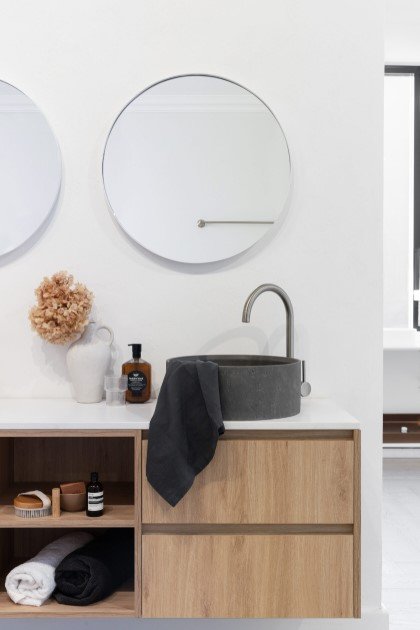
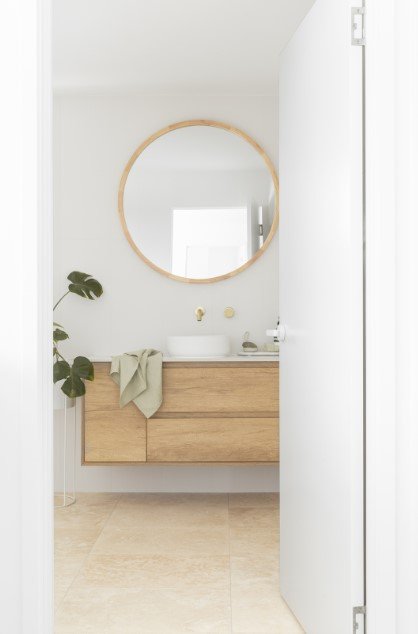
A drop-in sink, sometimes called a top-mount sink, is installed through an opening in the countertop. The rim of the sink rests on top of the counter.
This is one of the more straightforward sink styles and can work with many different vanity designs.
The visible rim can provide a traditional appearance while also making the sink relatively easy to install or replace.
Drop-in sinks are available in many shapes and materials, making them a flexible choice for different bathroom styles.
Vessel Bathroom Sink
A vessel sink sits above the countertop rather than being installed completely inside it.
This style can become a strong visual feature because the basin is highly visible. Vessel sinks are available in round, oval, square, rectangular, and artistic shapes.
They are especially popular in modern, contemporary, and luxury bathroom designs.
Because the basin sits higher than many conventional sinks, the vanity and faucet need to be selected carefully to create a comfortable overall height.
Wall-Mounted Bathroom Sink
A wall-mounted sink is attached directly to the wall rather than being supported by a vanity or pedestal.
This design can be especially useful in small bathrooms and powder rooms because it leaves more visible floor space underneath.
The open area beneath the sink can make a compact bathroom feel less crowded.
However, wall-mounted sinks generally provide little or no built-in storage, so additional shelving or cabinets may be necessary.
Pedestal Sink
A pedestal sink consists of a basin supported by a decorative pedestal.
This style has a classic appearance and works well in traditional bathrooms, guest bathrooms, and smaller spaces.
Pedestal sinks can provide a clean and elegant look without requiring a large vanity.
The main limitation is storage. Because there is no substantial cabinet beneath the basin, towels, toiletries, and cleaning supplies need to be stored elsewhere.
Console Sink
A console sink combines a basin with an open supporting structure, often using metal or wooden legs.
The exposed frame creates an airy appearance and can work well in traditional, industrial, vintage, and modern bathrooms.
Console sinks offer more visual openness than enclosed vanities, but storage may be limited.
A lower shelf can sometimes be added for towels or baskets.
Integrated Bathroom Sink
An integrated sink is built directly into the countertop or vanity surface.
The basin and countertop may be manufactured as a single continuous piece, creating a smooth appearance with minimal seams.
This style is particularly useful for contemporary bathrooms because the overall design feels simple and cohesive.
Integrated sinks can also be easier to clean because there are fewer edges and joints around the basin.
Corner Bathroom Sink
A corner sink is designed specifically for installation in a corner.
This can be a useful solution when space is limited or when a conventional vanity would interfere with movement.
Corner sinks are often found in small powder rooms and compact bathrooms.
Their placement can free up the center of the room while still providing a functional washing area.
Bathroom Sink Materials
The material of a sink affects its appearance, durability, maintenance, and overall cost.
Ceramic Bathroom Sink
Ceramic is one of the most familiar materials for bathroom sinks.
Ceramic sinks generally have a smooth surface that is relatively easy to clean. They can be manufactured in many shapes and are commonly available in white and other colors.
Their classic appearance makes them suitable for both modern and traditional bathrooms.
Porcelain Bathroom Sink
Porcelain sinks have a smooth, nonporous surface and are widely used in residential bathrooms.
White porcelain can create a bright and clean appearance, while colored options can add more personality to a bathroom.
With proper care, porcelain can remain attractive for many years.
Vitreous China
Vitreous china is commonly used in bathroom fixtures and has a glossy, durable surface.
It is particularly popular for traditional bathroom sinks because of its clean appearance and easy maintenance.
The smooth surface also works well with minimalist bathroom designs.
Stone Bathroom Sink
Natural stone sinks can create a luxurious and distinctive appearance.
Materials such as marble, granite, travertine, and other stones can provide natural patterns and textures.
Stone sinks may require more maintenance than conventional ceramic or porcelain options, depending on the specific material and finish.
They can be particularly effective in luxury bathrooms where natural materials are an important part of the design.
Glass Bathroom Sink
Glass vessel sinks can create a modern and decorative look.
Transparent, frosted, colored, and textured glass options are available.
Because glass can show water spots more readily than some other materials, regular cleaning may be necessary to maintain its appearance.
Stainless Steel Bathroom Sink
Stainless steel is more commonly associated with kitchens, but it can also be used in certain bathroom designs.
It can complement industrial, minimalist, and contemporary interiors.
Stainless steel is durable and easy to clean, although its appearance is quite different from traditional white bathroom fixtures.
Solid Surface Sink
Solid surface materials can be shaped into smooth, seamless bathroom sinks.
They can work particularly well with modern vanities and integrated countertops.
One advantage is the ability to create a coordinated countertop and sink design.
Bathroom Sink Shapes
The shape of a bathroom sink can influence both its appearance and how much usable space it provides.
Round Bathroom Sink
Round sinks are often used for vessel installations and can create a soft, decorative appearance.
They work especially well with contemporary and artistic bathroom designs.
Oval Bathroom Sink
Oval sinks have a classic appearance and can provide generous basin space without requiring the footprint of a large rectangular sink.
They are suitable for traditional, transitional, and contemporary bathrooms.
Rectangular Bathroom Sink
Rectangular sinks provide a clean, structured appearance.
They are commonly used with modern vanities and countertop installations.
The straight edges can coordinate well with rectangular mirrors, wall tiles, and cabinetry.
Square Bathroom Sink
Square sinks can create a bold modern appearance.
They work particularly well in contemporary bathrooms where geometric shapes are used throughout the design.
Bathroom Sink Size Considerations
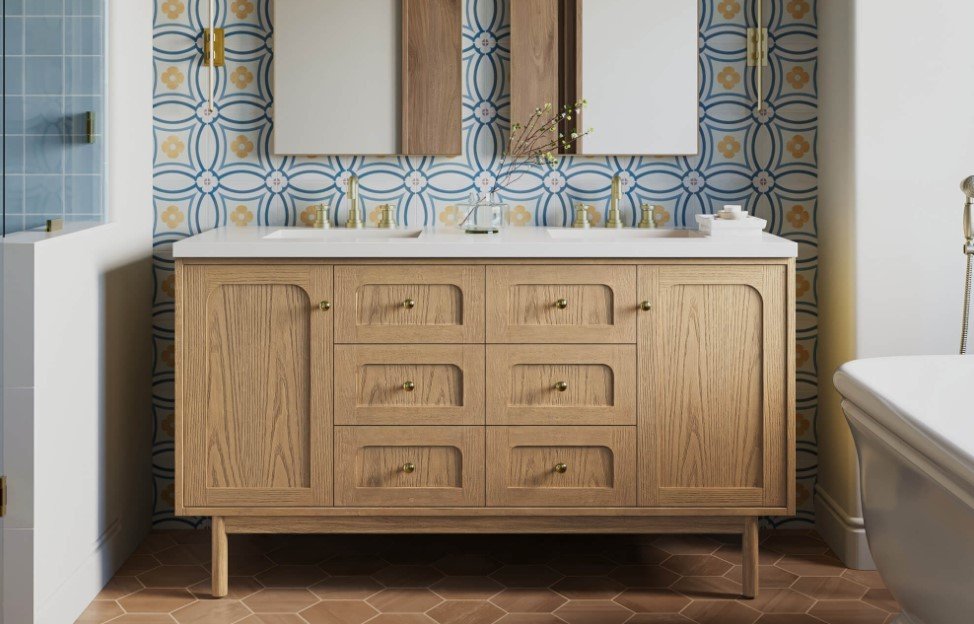
Choosing the correct sink size is important for both comfort and appearance.
A sink should be large enough for everyday activities but not so large that it overwhelms the bathroom.
Measure the available countertop, vanity, and wall space before choosing a sink.
Also consider the clearance around the sink. There should be enough room to use the faucet comfortably and place basic bathroom items nearby.
In a small bathroom, a compact sink may be more practical than a large basin.
In a spacious master bathroom, a larger sink or double-sink vanity may provide greater convenience.
Small Bathroom Sink Ideas
Small bathrooms often require careful planning because every inch matters.
A wall-mounted sink can create more visible floor space and make the room feel less crowded.
A compact pedestal sink can also work well in a small bathroom, particularly when storage is not a major concern.
Corner sinks are another useful option when the layout allows.
A narrow vanity with an integrated sink can provide both washing space and some storage without taking up too much room.
Light-colored sinks can also help maintain a bright appearance in a small bathroom.
Double Bathroom Sink Ideas
A double bathroom sink provides two separate basins within one vanity.
This arrangement is especially useful in shared bathrooms because two people can use the space at the same time.
Double sinks are often used in master bathrooms.
When planning a double vanity, consider the amount of counter space between and around the basins. Each sink should have enough surrounding area to remain comfortable and functional.
The available plumbing and wall space should also be considered before installation.
Bathroom Sink and Vanity Combinations
The sink and vanity should be planned together.
An undermount sink works well with a countertop vanity because the basin is positioned beneath the counter.
A vessel sink can create a more decorative look and may allow the countertop to become a visual feature.
An integrated sink and countertop can provide a streamlined appearance.
When choosing a vanity, consider storage requirements as well as appearance. Drawers and cabinets can keep toiletries, towels, and cleaning products organized.
The combination of sink, vanity, countertop, and storage should support the way the bathroom is actually used.
Choosing a Bathroom Faucet
The faucet should complement the sink and work with its installation style.
Some sinks have pre-drilled faucet holes, while others are designed for wall-mounted or countertop-mounted faucets.
Vessel sinks often require taller faucets because the basin sits above the countertop.
A low-profile faucet may work better with a conventional undermount or drop-in sink.
Consider the faucet’s finish as well. Chrome, brushed nickel, matte black, brass, and other finishes can create different visual effects.
The faucet should not only look attractive but also provide comfortable water flow and easy operation.
Bathroom Sink and Mirror Design
The relationship between the sink and mirror can have a major influence on the appearance of the bathroom.
A rectangular mirror can complement a rectangular vanity and sink.
A round mirror can soften a bathroom with strong straight lines.
For a double vanity, a large horizontal mirror or two separate mirrors can work depending on the layout.
Lighting around the mirror should also be considered because poor lighting can make everyday grooming difficult.
A coordinated sink, mirror, faucet, and lighting arrangement can create a polished bathroom design.
Bathroom Sink Storage Ideas
Storage is one of the biggest considerations when choosing a bathroom sink.
A vanity with drawers can provide convenient storage for small toiletries.
Cabinet doors can accommodate larger items such as cleaning supplies and spare towels.
Open shelving beneath a console sink can be used for baskets, towels, or decorative items.
Wall-mounted sinks can be paired with floating shelves or wall cabinets.
Medicine cabinets can provide additional storage while also functioning as mirrors.
The best storage solution depends on the bathroom’s size and how much storage is needed.
Bathroom Sink Color Ideas
White remains one of the most popular bathroom sink colors because it creates a clean and timeless appearance.
Black sinks can create a dramatic modern look.
Gray can work well in contemporary and neutral bathroom designs.
Beige and cream tones can create a warmer appearance.
Colored or patterned vessel sinks can become decorative focal points.
When selecting a sink color, consider the countertop, tile, vanity, flooring, and fixtures. A coordinated palette generally creates a more harmonious result.
Modern Bathroom Sink Design
Modern bathrooms often emphasize clean lines, simple shapes, and uncluttered surfaces.
Rectangular undermount sinks, integrated sinks, floating vanities, and minimalist faucets can all contribute to a modern appearance.
Matte black or brushed metal fixtures can provide contrast against a light sink and countertop.
A simple rectangular mirror can complete the design.
The goal is not necessarily to add more decoration but to create a balanced combination of useful fixtures and clean visual lines.
Luxury Bathroom Sink Ideas
Luxury bathrooms often use premium materials and carefully coordinated fixtures.
Natural stone countertops, elegant vessel sinks, sophisticated faucets, large mirrors, and decorative lighting can create a high-end appearance.
A double vanity can provide both visual impact and practical convenience.
Luxury does not always require elaborate decoration. High-quality materials, thoughtful proportions, good lighting, and a cohesive color palette can create a refined bathroom without making the room feel crowded.
Bathroom Sink Ideas for Guest Bathrooms
Guest bathrooms generally benefit from simple and practical sink designs.
A compact vanity can provide storage while keeping the room organized.
A pedestal sink can work well when space is limited and storage is not essential.
A stylish vessel sink can add personality to a guest bathroom.
Because guests may not use the bathroom as frequently as household members, decorative details such as an attractive mirror, wall lighting, and coordinated accessories can be particularly effective.
Bathroom Sink Cleaning and Maintenance
Regular cleaning helps keep a bathroom sink looking attractive and hygienic.
Use cleaning products appropriate for the sink material.
Avoid harsh abrasive products if the manufacturer recommends against them because they can damage certain finishes.
Wipe away water and soap residue regularly to reduce buildup.
Clean the faucet and drain area as part of your normal bathroom routine.
For stone sinks, follow the care recommendations for the specific stone and finish.
A clean sink not only looks better but also makes the entire bathroom feel more maintained.
Preventing Bathroom Sink Clogs
Bathroom sink drains can become clogged by hair, soap residue, toothpaste, and other debris.
A drain strainer can help reduce the amount of material entering the plumbing.
Avoid allowing large amounts of debris to go down the drain.
If water begins draining slowly, address the problem early rather than waiting for a complete blockage.
Regular cleaning of the drain area can help maintain good water flow.
For persistent plumbing problems, professional assistance may be appropriate.
Bathroom Sink Water Splash Problems
Water splashing can happen when the sink, faucet, and water flow are not properly matched.
A faucet that is too tall, too short, or positioned incorrectly can cause water to hit the wrong part of the basin.
The depth and shape of the sink also influence splashing.
When replacing a sink or faucet, consider both fixtures together rather than selecting them independently.
Proper installation can also make a significant difference.
Bathroom Sink Installation Considerations
Installing a bathroom sink involves more than simply placing the basin on a countertop.
The plumbing connections need to align correctly with the drain and water supply.
The countertop or vanity must be properly prepared for the selected sink style.
Wall-mounted sinks may require appropriate wall support.
Vessel sinks need compatible faucet placement and countertop preparation.
Because plumbing installation can involve water connections and drainage, complex installations may be better handled by a qualified professional.
Bathroom Sink Design for Different Bathroom Styles
A sink should complement the overall design of the room.
A farmhouse bathroom may look attractive with a traditional ceramic sink, natural wood vanity, and warm metal fixtures.
A modern bathroom can benefit from a rectangular undermount or integrated sink.
A minimalist bathroom may use a simple wall-mounted basin with minimal accessories.
An industrial bathroom can combine a console sink with dark metal fixtures.
A luxury bathroom can feature a stone countertop and elegant vessel or undermount sink.
The most successful bathroom designs usually repeat similar shapes, finishes, and materials throughout the space.
Common Bathroom Sink Mistakes
Choosing a sink without measuring the available space is one of the most common mistakes.
A sink may look attractive in a showroom but feel oversized once installed in a small bathroom.
Another mistake is ignoring faucet compatibility.
The sink and faucet need to work together in terms of hole configuration, height, reach, and placement.
Ignoring storage can also create problems. A beautiful pedestal sink may not be practical for a household that needs substantial bathroom storage.
Choosing a sink based only on appearance can also lead to maintenance problems. Some materials require more care than others.
Finally, failing to consider the entire bathroom design can make the sink feel disconnected from the rest of the space.
How to Choose the Best Bathroom Sink
The best bathroom sink depends on the specific needs of the room.
Start by measuring the available space.
Consider how many people will use the bathroom and how frequently.
Think about whether you need storage beneath or around the sink.
Choose a sink material that matches your cleaning and maintenance preferences.
Select a shape that works with the vanity, mirror, countertop, and overall bathroom style.
Make sure the faucet and plumbing configuration are compatible.
Finally, consider how the sink will look alongside the bathroom’s colors, tiles, lighting, and accessories.
A practical sink that fits the space properly will generally provide more satisfaction than a visually appealing sink that creates functional problems.
Bathroom Sink Trends and Timeless Design
Bathroom trends change over time, but certain sink designs remain popular because they are practical and adaptable.
Clean rectangular shapes, integrated countertops, undermount sinks, and simple white ceramic basins can work across many different design styles.
Natural materials and warm metal finishes can add character without making the bathroom feel overly trendy.
Floating vanities paired with simple sinks can create an open appearance.
The best approach is often to use timeless elements for expensive or difficult-to-replace fixtures while adding current trends through accessories, paint, mirrors, or decorative details.
Frequently Asked Questions About Bathroom Sinks
What type of bathroom sink is best for a small bathroom?
Wall-mounted, corner, compact pedestal, and small vanity sinks can all work well in small bathrooms. The best option depends on the layout, storage needs, and available wall and floor space.
What is the easiest bathroom sink to clean?
Undermount and integrated sinks can be relatively easy to clean because their surfaces have fewer raised edges. The specific material and design also affect maintenance.
Are vessel sinks practical?
Yes. Vessel sinks can be practical when properly paired with a suitable vanity and faucet. Their raised design can also make them an attractive focal point.
Are bathroom sinks standard size?
Bathroom sinks come in many sizes and shapes. There is no single universal size that works for every bathroom. The appropriate size depends on the vanity, countertop, room dimensions, and user requirements.
What sink is best for a modern bathroom?
Rectangular undermount, integrated, wall-mounted, and vessel sinks can all work well in modern bathrooms. Clean lines and simple finishes generally complement modern design.
Is a pedestal sink good for a small bathroom?
A pedestal sink can be an excellent option for a small bathroom because it takes up relatively little visual space. The main disadvantage is limited storage.
What material is best for a bathroom sink?
Ceramic, porcelain, vitreous china, solid surface, glass, and natural stone can all be suitable. The best choice depends on appearance, durability, maintenance, budget, and bathroom style.
How do I choose the right bathroom sink size?
Measure the available vanity and countertop space and consider the surrounding clearance. The sink should provide comfortable washing space without overwhelming the bathroom.
Can I replace a bathroom sink without replacing the vanity?
In many situations, yes. The replacement sink must be compatible with the existing countertop, cabinet, plumbing, and faucet configuration.
Should a bathroom sink match the bathtub and toilet?
A sink does not necessarily have to match them exactly, but coordinating colors, materials, and finishes can create a more cohesive bathroom design.
How can I make a small bathroom sink area look larger?
Choose a compact sink, light colors, a wall-mounted or floating vanity, a large mirror, and good lighting. Keeping the countertop uncluttered can also make the area feel more spacious.
What type of sink provides the most counter space?
Undermount and integrated sinks can allow more usable countertop area around the basin depending on the vanity design. The overall counter dimensions are also important.
Final Thoughts
A bathroom sink is both a practical fixture and an important design element. The right choice can improve the way a bathroom functions while also contributing to its overall appearance.
With options ranging from undermount and vessel sinks to pedestal, wall-mounted, integrated, and console designs, there is a bathroom sink for almost every space and decorating style.
The most important considerations are size, installation style, material, faucet compatibility, storage, maintenance, and the overall bathroom layout. A sink should fit comfortably into the available space and support the way the room is actually used.
For a small bathroom, a compact wall-mounted or pedestal sink may help maintain an open feeling. For a larger bathroom, an undermount or double vanity sink can provide additional convenience and counter space. A vessel or stone sink can become a decorative feature when the goal is to create a more distinctive interior.
Rather than choosing a sink based only on appearance, consider how it will work with the vanity, countertop, mirror, faucet, lighting, flooring, and other bathroom fixtures. A coordinated design will feel more intentional and remain useful for years.
A well-selected bathroom sink can bring together functionality, comfort, storage, and style, making it one of the most valuable elements to consider when creating a beautiful bathroom.